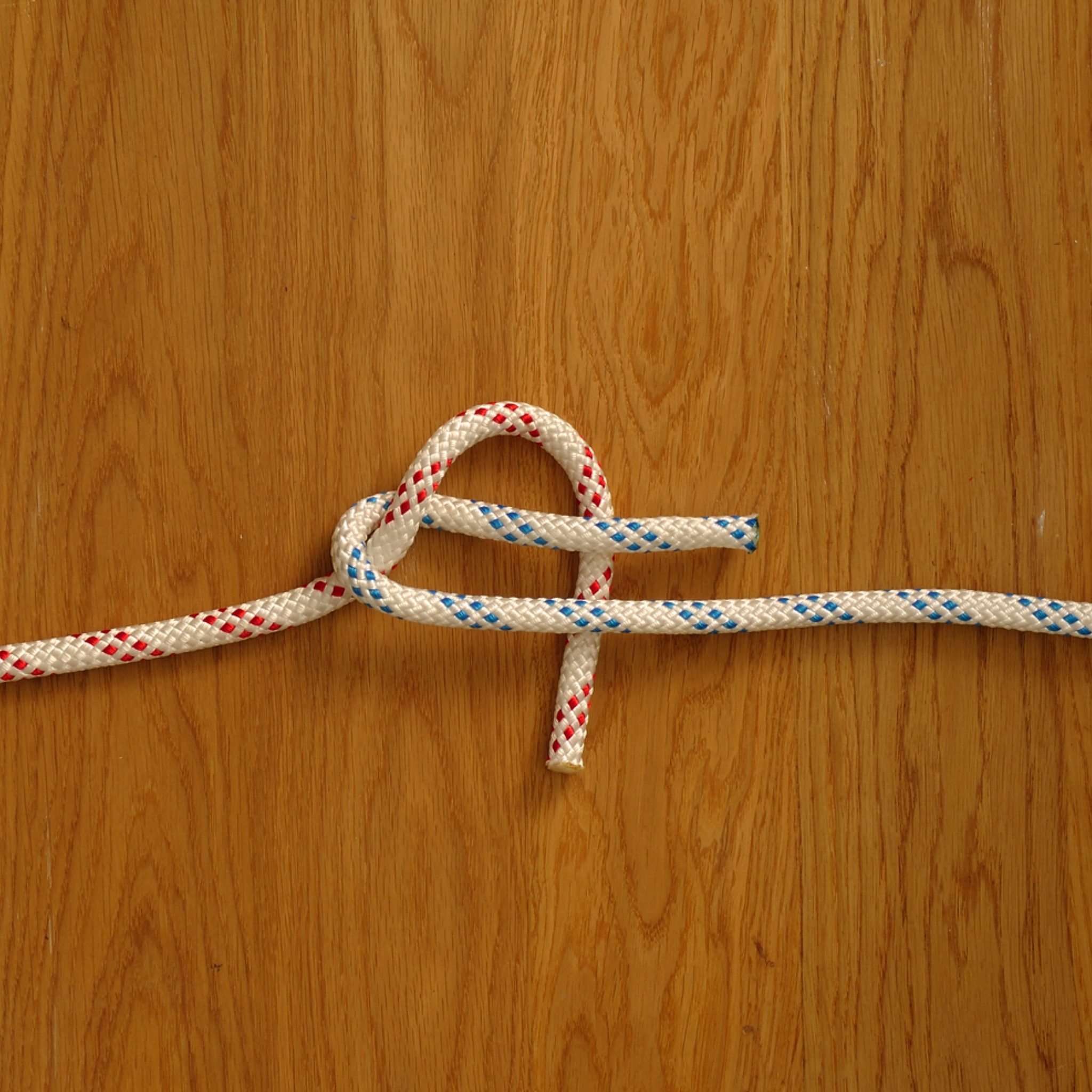
Essential Knots: Sheet bend

Use: Joining two ropes together. A sheet bend is particularly useful for joining two ropes of different thicknesses together and is very secure.

Step 1. Make a bight in the end of one rope (the thicker one if the two are different thicknesses).

Step 2. Pass the other rope through the bight…

Step 3 .…then around and under, leaving both ends on the same side.
Step 4. Pass the end of the second (thinner) rope under its own standing part. Pull tight.
Tip: Make sure that the two free ends end up on the same side of the knot. If they are on opposite sides then the knot is more likely to come undone.
A one stop guide to tying and understanding all of the 50 most useful nautical knots!


Boat gas system maintenance
There are correct types of hose for marine plumbing, sewerage, exhaust, cooling and gas and all hoses should be checked regularly for wear and deterioration.
Jester Challenge 2022 – Sailing single handed from Plymouth UK to the Azores: Part 3 – Preparations
Jester Challenge – A modern experiment in old-fashioned self-reliance, self sufficiency, and personal responsibility. This is the third of a 10-part post where solo sailor, Bernie Branfield, shares his first hand account of his single-handed, 2022 Jester Challenge, from Plymouth, UK to the Azores, in his 26′ Invicta Mk2, Louisa.
Cleaning & polishing painted topsides
The gelcoat topsides of a GRP boat can be pampered and restored to their former glory relatively easily when it is ashore. Gelcoat is only a very thin outer layer of the hull, often less than 1mm thick, so you should avoid cleaning it with highly abrasive cleaners, or an-ything that could potentially damage its surface.
Fire prevention on boats
Gybing a sailing boat
Antifouling for leisure boats – Part 2
To prepare for antifouling, as soon as your boat has been lifted out and pressure washed, you need to check all the surfaces of the hull below the waterline, remove any remaining barnacles and check for blisters.
Care of boat batteries
Boat batteries need to be kept properly charged, which means never allowing the batteries to discharge below 50 per cent of their total charge. As well as the batteries themselves, keeping a boat’s charging systems in good shape will also help to keep batteries topped up to a higher level of charge.
Avoiding collisions at sea – how to stay safe on the water
Navigating the Unknown: Boating in Limited Visibility
Sailing or Motor Boating in limited visibility, whether due to darkness, fog, or other adverse weather conditions, presents unique challenges for mariners. It requires a combination of skill, experience, and adherence to safety protocols to ensure a safe and enjoyable journey. In this article we will delve into the intricacies of sailing in such conditions, providing insights into preparation, navigation, and collision avoidance.
Essential Knots: Reef knot
Essential boat engine checklist
Antifouling for leisure boats – Part 3
Antifouling is one of the least pleasant boat maintenance jobs to do, but it has to be done. The very worst job of all is removing the old antifouling as this can get seriously messy and is very hard work.
Rig check – how to prevent failure at sea
Essential Knots: Figure of eight
Sailing Safely at Night – Best Practice
Sailing at night can be a magical experience – the peaceful solitude, starry skies, and gentle lapping of waves create an unforgettable atmosphere. However, nighttime sailing also presents unique challenges and risks that require careful preparation and vigilance. This comprehensive guide will cover essential safety practices to ensure your nocturnal nautical adventures are both enjoyable and secure.
The Round The Island Race 2023
This year’s Round the Island Race turned out to be a really thrilling and competitive event. 1100 boats entered the race, which took place on Saturday 1st July. The race started from the world famous Royal Yacht Squadron line in Cowes UK, with the largest and fastest boats starting first, leaving the rest of us to wait our turn.
Know your Navlights & Shapes – essential for all skippers
ColRegs – avoiding collisions at sea
Sailboat rig checks – Part 1
Sailing boat rigs need to be checked regularly to reduce the risk of rig failure at sea. In part one of Sail boat rig checks we run through a series of useful checks that owners and skippers can carry out.
The VHF DSC Radio jargon buster
What boating skills should you have before you buy a yacht?
Navigating Through Rough Waters: Tips for Handling Adverse Weather Conditions in a Sailboat
Navigating through rough waters in a sailboat requires skill, preparation, and a good understanding of both your vessel and the environment. Here are some tips for handling adverse weather conditions including Preparation, Techniques, Safety and much more..