Select Page

Engine Safety Checks

Engine failure

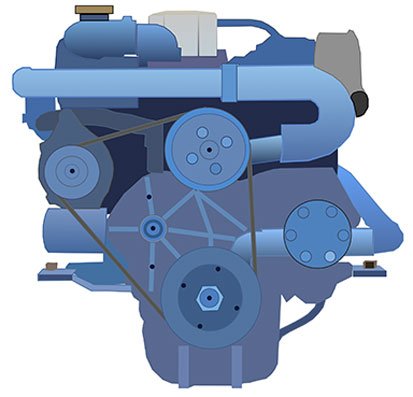
If your engine fails or is overheating there are a number of things to check immediately:

• Air filter blocked – check, clean or replace
• Cooling water low – fill when engine is cold. Check for leaking hoses
• Exhaust pipe blocked
• Fuel filter – a blockage reduces power and can stop the engine stop. Check, clean or change the filter
• Lack of lubrication – check engine and gearbox oil levels
• Oil filter blocked – replace
• Raw water inlet filter – a blockage causes overheating and can lead to engine failure. Close seacock, check and clear filter. Re-open seacock. Check object (eg. plastic bag) is not obstructing seacock
• Water pump impeller failure – cooling system fails and engine overheats. Check the rubber impeller is slightly flexible, not hard, and replace if necessary
• Worn drive belts – replace if they are frayed or shiny

Many engine failures at sea are caused by lack of maintenance, resulting in filter blockages, engine pump failures, overheating and then breakdown.

It is worth remembering that one of the most common reasons for marine rescue service call outs is for boats running out of fuel.

Tips to avoid engine failure:

  1. Keep the engine regularly maintained
  2. Always do engine checks before setting out
  3. Check fuel and oil levels regularly (don’t rely 100% on gauges!)
  4. Check drive belts for wear and tightness
  5. Look out for oil and coolant leaks
  6. Check fuel filter for water or dirt. Drain off any contaminants until the fuel in the clear glass bowl by the filter is clear
  7. Learn how to bleed the fuel system if air gets into it

All of this advice and more is available in our easy-to-use, quick to access app for iPhone and Android. Go to SafeSkipper.com for more.

How to improve a yacht’s upwind performance

There are several ways to improve the upwind performance of a sailing yacht. Read on for some useful tips including headsail reefing, heavy weather jibs and motor sailing.

Jester Challenge 2022 – Sailing single handed from Plymouth UK to the Azores: Part 10 – The Return Trip

Jester Challenge – A modern experiment in old-fashioned self-reliance, self sufficiency, and personal responsibility. This is the final instalment of a 10-part post where solo sailor, Bernie Branfield, shares his first-hand account of his single-handed, 2022 Jester Challenge, from Plymouth, UK to the Azores, in his 26′ Invicta Mk2, Louisa.

Navigating the Unknown: Boating in Limited Visibility

Sailing or Motor Boating in limited visibility, whether due to darkness, fog, or other adverse weather conditions, presents unique challenges for mariners. It requires a combination of skill, experience, and adherence to safety protocols to ensure a safe and enjoyable journey. In this article we will delve into the intricacies of sailing in such conditions, providing insights into preparation, navigation, and collision avoidance.

You Need To Understand The IRPCS ColRegs To Pass Your Yachtmaster, Master of Yachts and Coxswain Certificate of Competence

IRPCS ColRegs Rules of the Road at Sea and Yachtmaster Learning, understanding and remembering the International Regulations...

Crew Overboard Drill – Updated

How to respond to crew overboard A Man Overboard (MOB) drill is a crucial safety procedure that every boater should practice regularly. It simulates...

Cleaning & polishing painted topsides

The gelcoat topsides of a GRP boat can be pampered and restored to their former glory relatively easily when it is ashore. Gelcoat is only a very thin outer layer of the hull, often less than 1mm thick, so you should avoid cleaning it with highly abrasive cleaners, or an-ything that could potentially damage its surface.

First aid at sea basics

At least one person on board should be trained in first aid and know how to administer the contents of the first aid kit, ensuring there are adequate supplies for the planned duration of the trip.

Seasickness – how can you prevent it?

Seasickness is a common problem at sea and affects both seasoned sailors and novices. What are the causes and symptoms of seasickness?...

Top 5 Reasons Why an Inflatable SUP Should Be Your Next Yacht Accessory

In this article, inflatable paddle board expert Jason Paul gives the top 5 reasons why an inflatable SUP should be your next...

Repairing a leaking hull-to-deck joint

If you suspect a hull-to-deck joint has failed, then being absolutely sure where the actual leak is occurring is of prime...

Understanding marine sealants & adhesives

Sealants, adhesives and adhesive sealantsThere is a bewildering variety of sealants, adhesives and even adhesive sealants available for...

Tips and advice for staying safe on a sailboat at sea

Here we focus on how to stay safe on a sailboat at sea. We cover key things to ensure you have on board before you set sail as well as covering the most common cause of incidents on sailboats and how to deal with them.

First aid at sea – four common emergencies

In this blog we look at what to do in the event of a crew member choking, drowning, or suffering from hypothermia or fatigue. Knowing how to cope with them could well save a life, while not knowing could result in an avoidable tragedy.

Understanding your boat’s compass

Article submitted by Mike Rossiter, Certificated Compass Adjuster. Since the magnetic compass was first used by the Chinese...

Hull inspection – the annual checks

With the boat ashore for the winter it is time to do a hull inspection - the annual checks. Are there any scratches and chips in the...

Pre-start engine checks

According to the Royal National Lifeboat Institution (RNLI) almost one third of emergency call outs at sea are caused by mechanical failure. Many engine breakdowns are avoidable. The best way to avoid a breakdown is to carry out pre-start checks before heading out to sea.

Engine failure at sea – keeping the boat safe

If the engine stops when you are underway, or your have to shut it down when a warning buzzer sounds, you also need to make sure the boat remains safe. It’s important therefore to recognise situations in which the boat would be immediately put in danger if the engine were to fail.

A simple guide to understanding tides when passage planning

Understanding tides when passage planning When planning a trip in tidal waters, check the tides before going afloat. Use...

Essential Knots: Round turn and two half hitches

Essential Knots: Round turn and two half hitches Use: Tying a rope to a pole or a ring. Step 1. Pass the end around the object. Step 2....

Essential Knots: Bowline

Essential Knots: Bowline Use: Making a secure eye or loop in the end of a rope. Bowlines have many uses on a boat, for example to make a...

Care of boat batteries

Boat batteries need to be kept properly charged, which means never allowing the batteries to discharge below 50 per cent of their total charge. As well as the batteries themselves, keeping a boat’s charging systems in good shape will also help to keep batteries topped up to a higher level of charge.

Boat engine cooling systems

Some boat engine breakdowns are unavoidable but those caused by lack of maintenance or regular checks can be avoided. Failure to maintain an engine’s cooling system is a well known example of this, so it is well worth spending time checking over the cooling system both when the boat is ashore and afloat.

Know your Navlights & Shapes – essential for all skippers

Know your Navlights & Shapes International Regulations for Preventing Collisions at Sea (ColRegs) Anyone who is...

Right boat vs Wrong boat – Over 30 Ways to Cut the Cost of Your Sailing and Cruising

Sailing and cruising offer unparalleled freedom and adventure, but they can quickly become costly. Fortunately, there are numerous strategies to help you enjoy the open water without breaking the bank. Here are over 30 practical ways to cut your sailing and cruising costs.

Boat gas system maintenance

There are correct types of hose for marine plumbing, sewerage, exhaust, cooling and gas and all hoses should be checked regularly for wear and deterioration.