Select Page

Essential boat engine checklist

Essential boat engine checklist

Boat engine checklist

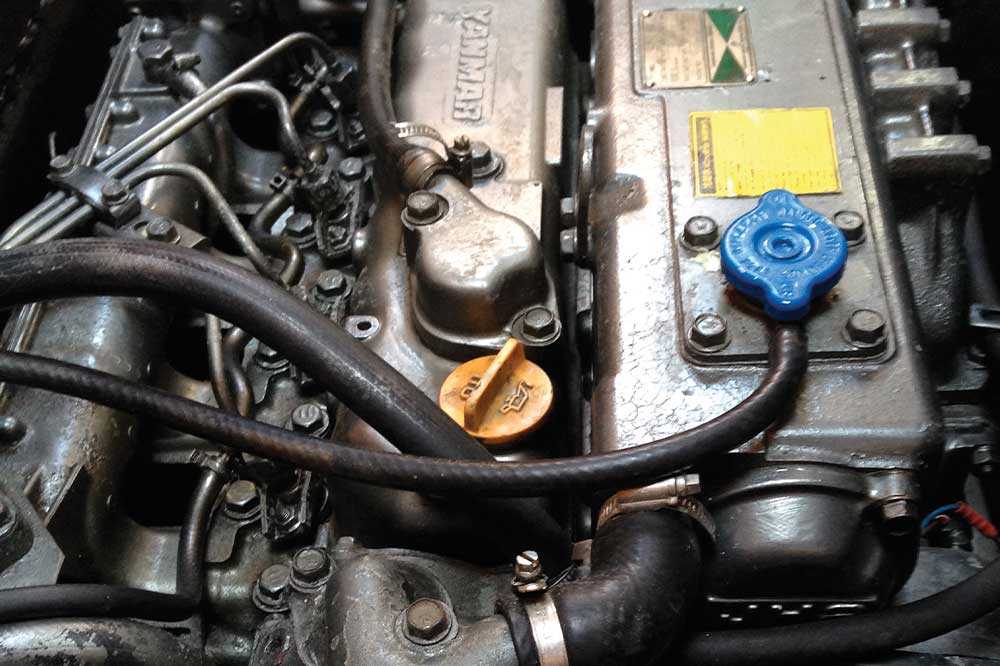
Engine oil level check

Even if you have checked it previously, confirming the engine oil level is up to scratch will give you peace of mind on a passage.

Cooling water check

It is the same with the cooling water in the engine. Check the water level before you start up the engine.

Spare oil on board

Carrying some spare oil for the engine is a wise precaution just in case a leak develops.

Fuel filter check

If your primary fuel filter has a glass bowl then a quick check to confirm that there is no water or dirt in the bowl will give you peace of mind on the passage.

Sea water intake filter check

Most water intakes have a clear top so you can check that there is no debris or seaweed inside that might block the filter.

Seacocks open

You will often close the seacocks when in harbor so make sure that they have been opened before you start the main engine and check that all other necessary seacocks are also open.

Loose equipment stowed and secured

The last thing you want in the engine room and steering compartment is any loose equipment or tools wandering around when the boat starts moving in a seaway, so check that everything is secure.

Battery and electrical switches

The battery switches should all be open before going to sea and check that switches with multiple choices are set to the right position.

Check the belt drive for the water pumps and the alternator

A quick feel of the amount of slack in the drive belts will confirm that they will work correctly, thus reducing the chance of slipping or breakage when out at sea.

Stern gland

This may be of the type that needs greasing at regular intervals so make sure the greaser is full and screw it down a turn or two.


From the new app for iPhone & Android:

Dag Pike’s Boating Checklists

ag Pike began his career as a merchant captain, went on to test lifeboats, and took up fast boat navigation, winning a string of trophies for powerboat races around the world, including navigating Richard Branson's Virgin Atlantic Challenger on the record-breaking fastest Atlantic crossing by powerboat.

About the author:

Dag Pike began his career as a merchant captain, went on to test lifeboats, and took up fast boat navigation, winning a string of trophies for powerboat races around the world, including navigating Richard Branson’s Virgin Atlantic Challenger on the record-breaking fastest Atlantic crossing by powerboat.


VHF DSC radio – how best to communicate at sea

There are many ways to communicate with others at sea. What makes the VHF DSC radio the best form of short range...

Safety at sea principles

Safety at sea is not as simple as just spending money adding shiny new emergency equipment such as liferafts, danbuoys, distress flares, EPIRBs and so on.

Boat gas system maintenance

There are correct types of hose for marine plumbing, sewerage, exhaust, cooling and gas and all hoses should be checked regularly for wear and deterioration.

What boating skills should you have before you buy a yacht?

Many people dream of owning a yacht and sailing off into the blue yonder. What boating skills should you have before you buy...

Essential Knots: Reef knot

Essential Knots: Reef knot Use: Tying two ends of rope together, often used for tying up a bundle of loose sail around the boom. Step...

Boat decks and superstructure

The deck of a boat is constantly exposed to the elements and should be inspected on an annual basis. Particular attention needs to be given to the overall condition of deck fittings such as the stanchions, cleats and chainplates.

How diesel engines work

The basic principle of a diesel engine is less complex than that of a petrol engine. No spark plug or ignition system is needed, making the basic diesel engine a comparatively straightforward system that results in fewer faults and has lower maintenance costs than a petrol engine.

Keeping boat records and doing checks

A boat’s records should provide information about maintenance schedules, when major work was done and when equipment was replaced or added to the boat. Without this information you are left guessing when things are likely to need replacing in the future and also what the costs are likely to be.

Estimating and plotting your position at sea

This post covers how we go about estimating and plotting our position using traditional methods, when out of sight of land – covering Dead Reckoning, Estimated Position, Tidal Streams, Leeway and more…

Competent crew skills: mooring lines

Mooring lines are used when arriving or leaving a berth. One of the most important competent crew skills is to know how to...

Boat batteries

Under-sized battery banks are one of the key factors behind power failure at sea, as well as the premature failure of batteries, so make sure that your boat battery measures up to the use you want to put it to.

Wooden Hull Repairs

While wooden boat hull maintenance is mostly straightforward, it is always a good idea to take expert advice on any repair job needed doing to a wooden boat, unless you have done the job before and know what you are doing.

Leaking decks

Leaking decks are perceived as a nuisance by some boat owners, but if leaks are ignored a much more serious situation may well be developing, especially in the case of boats with balsa or plywood deck cores. So deck leaks do need to be investigated and dealt with.

Common medical emergencies at sea

A medical emergency aboard a boat at sea requires immediate attention to ensure the safety of the casualty and the crew in general. The skipper needs to know which crew members, if any, have had medical training or have a first aid qualification. All boats should carry first aid handbooks to help an untrained crew cope with a medical emergency.

Avoiding collisions at sea – how to stay safe on the water

Boats have many blind spots, including the headsails of sailing boats. Always keep a lookout, stay safe and remember that...

Essential Knots: Bowline

Essential Knots: Bowline Use: Making a secure eye or loop in the end of a rope. Bowlines have many uses on a boat, for example to make a...

Essential Boat Spares for Safety

  Boats Spares Tool kit What you carry in the boats tool kit will be useful for many boat repairs, but you might want...

Marine engine electrical system

The typical basic electrical system associated with a marine engine includes a dedicated engine starting battery, a starter motor, a charger in the form of an alternator, a solenoid and some engine sensors and instruments.

2023 Rolex Fastnet Race – Part 3

This is our third and final article about the 2023 Rolex Fastnet Race. It is a first hand account by Simon Jollands who was one of the crew of Lancelot II, a Beneteau First 40 skippered by John Gillard.

Fixing position at sea using traditional methods

This post looks at some traditional methods used for fixing a vessel’s position at sea, within sight of land. Electronic fixes using chart plotters are very straightforward to record, but if for some reason a vessel’s electronics are faulty it is essential that a skipper knows how to use traditional methods.

Nautical paper charts – a reminder of the basics

The nautical chart is an indispensable tool for navigation. A chart is a graphic representation of an area of the sea which might also include coastlines, estuaries and islands. All cruising leisure boats should carry up-to-date paper charts.

Liferafts

Liferafts should be stowed where they are ready for immediate launching. All crew should know the location of the liferaft and know how to launch, inflate and board it. They should also know what equipment it contains.

Antifouling for leisure boats – Part 2

To prepare for antifouling, as soon as your boat has been lifted out and pressure washed, you need to check all the surfaces of the hull below the waterline, remove any remaining barnacles and check for blisters.

Passage planning and pilotage

Passage planning and pilotage help skippers navigate safely from one port to another. A passage plan takes into account all...

ColRegs Rule 14 – Head-on Situation

  ColRegs Rule 14: Head-on Situation (a) When two power-driven vessels are meeting on reciprocal or nearly reciprocal...